How Private Limo Operators Can Compete with Uber Black and Ride-Share Apps
The rapid expansion of gig-economy platforms like Uber Black has fundamentally disrupted the traditional chauffeured transportation sector. While ride-share apps offer on-demand convenience, private limousine companies maintain key advantages: predictability, white-glove service, safety compliance, and direct relationship building.
For luxury transport operators to protect their market share and capture high-margin clients, they must shift from competing on speed or low price to competing on trust, reliability, and executive service standards.
Key Operational Differentiators: Limo Services vs. Ride-Share Platforms
|
Performance Metric |
Traditional Limo & Chauffeur Services |
Uber Black / App-Based Black Cars |
|
Driver Vetting & Status |
W-2/Direct Contractors; full background checks, drug testing, and professional livery training |
Independent contractors; basic app verification and minimal standardized hospitality training |
|
Pricing Predictability |
Fixed-rate quotes, locked contract terms, all-inclusive corporate invoicing |
Dynamic surge pricing, variable route multipliers, sudden peak-demand spikes |
|
Vehicle Consistency |
Dedicated fleet maintenance, guaranteed specific make/model, sanitized detailing |
Varies by individual driver-owner vehicle condition and availability |
|
Duty of Care Compliance |
Full corporate risk compliance, verified insurance bounds, duty-of-care tracking |
Platform liability limits; variable compliance across individual independent contractors |
|
Reservation Guarantee |
Scheduled dispatch with guaranteed on-time staging (15-minute advance arrival) |
Subject to real-time driver availability, cancellations, and app matching algorithms |
Actionable Strategies to Win High-Value Business
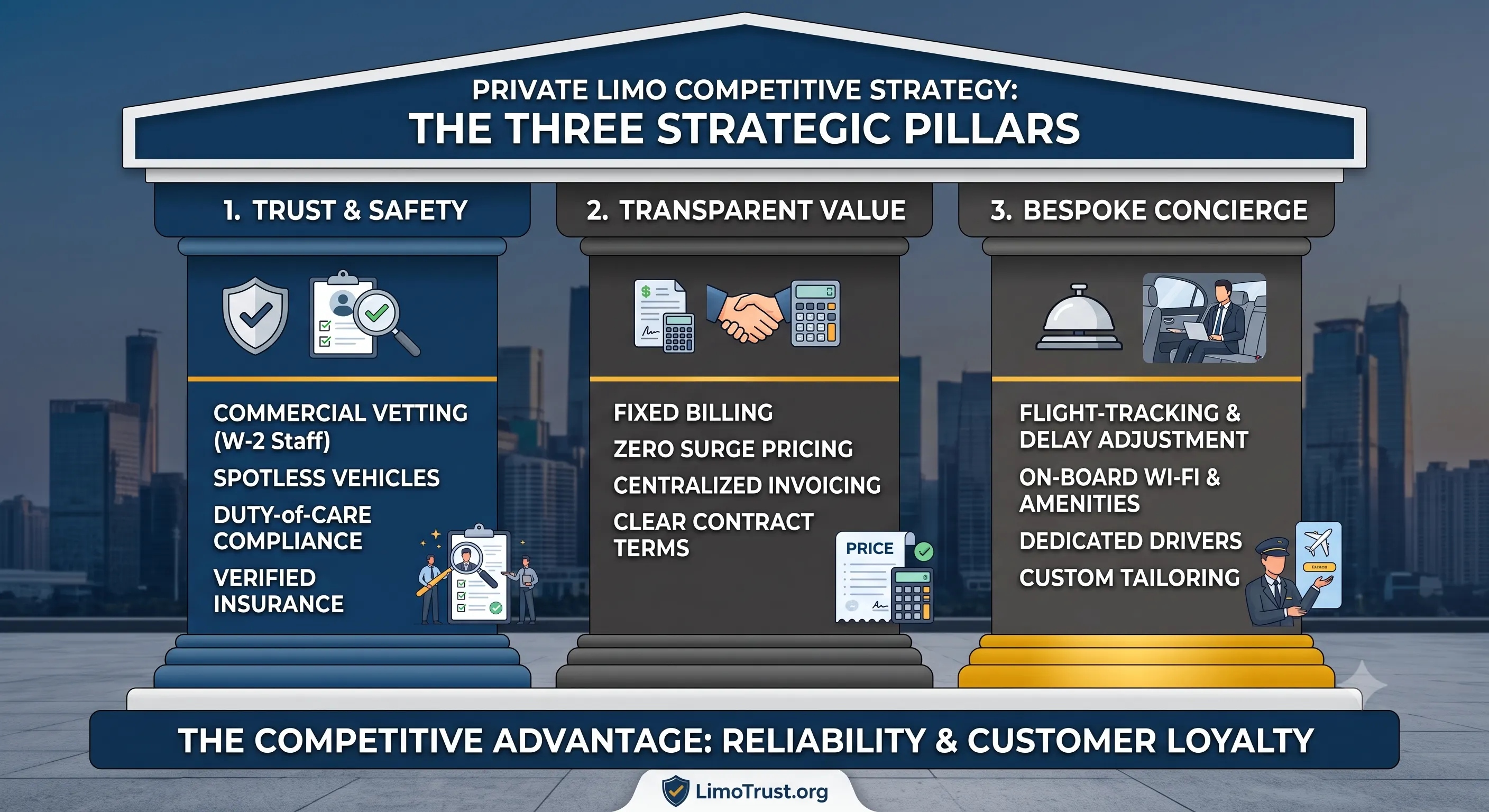
1. Leverage Certification & Duty-of-Care Mandates
Corporate travel procurement teams prioritize Duty of Care above convenience. Independent limousine operators should highlight their commercial licenses, liability limits, local livery permits, and third-party trust certifications (such as being a LimoTrust Certified provider). When pitching to corporate buyers, emphasize that app-based ride-hailing carries inherent liabilities regarding driver turnover and unverified vehicle maintenance.
2. Position Fixed Pricing Against "Surge" Instability
Surge pricing during major conventions, severe weather, or peak travel hours remains a major frustration for executive assistants and travel planners.
- The Fix: Market your service as "Zero-Surge Guaranteed." Offer fixed corporate airport rates and transparent hourly charter fees so enterprise accounting departments can budget without surprise line items.
3. Deliver Unmatched Concierge Experiences
Ride-shares deliver a point-A to point-B utility ride; chauffeured transport delivers an executive mobile office environment. Instruct drivers to provide personalized touches that apps cannot automate:
- On-board Wi-Fi and specified device chargers.
- Preferred climate control and requested bottled water brands.
- Professional flight tracking with real-time arrival adjustments and meet-and-greet baggage handling.
4. Deploy Modern Technology for Seamless Booking
Competing with tech companies requires intuitive digital booking tools. Independent operators must integrate white-label dispatch software (e.g., Limo Anywhere, Santa Cruz, Moovs) that provides clients with automated SMS driver-tracking links, digital receipts, and online portal booking—giving them app-like convenience paired with luxury execution.